Home Health Forms
We have taken the headache out of searching and creating the necessary forms to successfully run a home health company.
Industry Links
Stay current with the Home Care Industry
Thank you very much for the documents. I'm truly impressed with your work.
Christian A.
San Jose, CA

North Dakota Personal Care Agency Complete Startup Package
Private-Pay Operations and Medicaid Readiness
Start Your North Dakota Personal Care Agency With Confidence!
We make the process easier with a coordinated startup package for a North Dakota Personal Care Agency. A private-pay business limited to nonmedical personal care generally does not meet the skilled Home Health Agency definition, but it still needs sound business, personnel, screening, training, client-service, record, safety, and quality systems. Publicly funded services generally require Agency QSP enrollment under North Dakota HHS standards, including service selection, employee screening, competency, authorization, documentation, quality, and EVV requirements.
Our goal is to save you time, reduce confusion, and help you move forward with a professional, well-prepared foundation for your North Dakota Personal Care Agency. Let Us Start Your North Dakota Agency!
What's Included?
- Logo Creation
- Custom WordPress website and one year of website hosting: Sample Website
- Domain name registration for one year
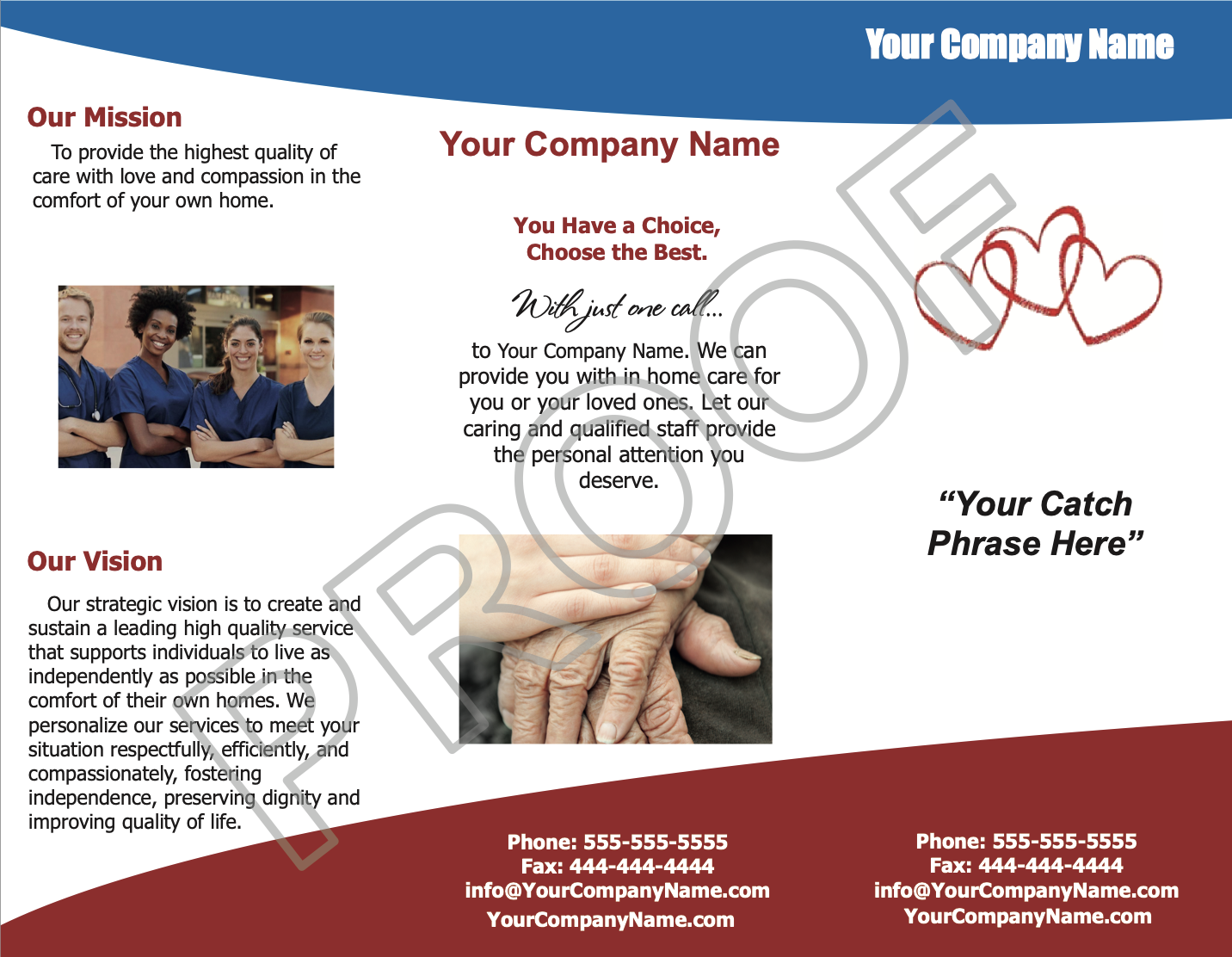
- Custom full-color tri-fold brochure design and printing — 500 brochures: Sample Brochure
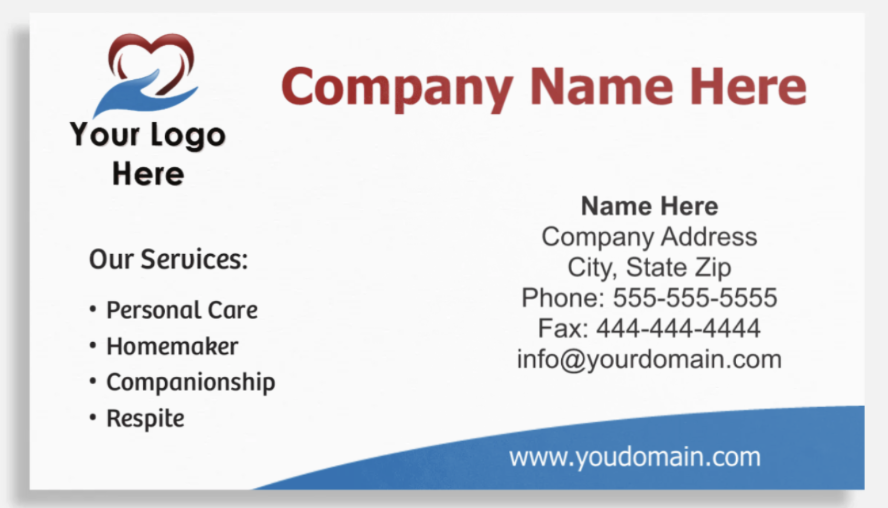
- Color Business Card creation and printing — 500 cards: Sample Business Card
- Comprehensive Document Package: Policy Manual, Human Resources, Client Service, and Forms — aligned with North Dakota Personal Care Agency operations: Learn More Here
- Member’s area access for future document updates, client community, and video tutorials
- Prepare private-pay operational materials plus optional North Dakota Agency QSP enrollment, employee-screening, competency, service-authorization, documentation, quality, and EVV readiness materials identified in your package: Learn More Here
- Guidance and feedback as necessary to ensure your success
Customize Your Package and Save
Already have brochures, website, or logo? Don’t need everything included in the package? Let us know, and we can customize the package and adjust the price accordingly.
Purchase Options
One-Time Payment — $4,995
Or
Three Equal Installments — $1,665 Each
Questions?
Give us a call and let us know about your needs.
Our documents are State Specific, customized with your company information, and cross-walked to the accreditation body of your choice as well as to state regulations.
We have helped hundreds of agencies with their document needs from North Dakota to Alaska and Coast to Coast. We offer the best prices in the industry with the fastest delivery.
Updates are Free!
We will customize the documents to your company at no additional charge!
You will have access to the member's area where you can interact with other members and download updates free of charge.
We also accept check or money order.
Mail Check or Money Order to:
Home Health Forms
3098 N. Eastman Rd, Suite 109
Longview, TX 75605
North Dakota Personal Care Agency Startup FAQs
Answers to common questions about North Dakota private-pay personal care, Agency Qualified Service Provider enrollment, employee screening, service authorization, documentation, and EVV.
Does a private-pay Personal Care Agency need a Home Health Agency license?
A business providing only nonmedical personal care, homemaker, or companion services generally does not meet North Dakota’s Home Health Agency definition, which requires skilled nursing and at least one other therapeutic service. Other business, local, employment, insurance, consumer, and program-specific requirements still apply.
When would Home Health Agency licensure apply?
If the business meets the statutory HHA definition by providing skilled nursing and at least one other therapeutic service, it must obtain a North Dakota HHS license before accepting patients or using “home health agency” or “home health services” in its name or advertising.
What is a non-medically directed personal-care scope?
Typical services include assistance with activities of daily living, grooming, bathing, dressing, mobility, toileting, meal preparation, light homemaking, errands, and companionship. The written scope should exclude skilled nursing, therapy, and other services requiring licensed professionals unless the agency obtains the appropriate authority.
Is this the same as a skilled Home Health Agency?
No. A personal care agency assists with daily living through a nonmedical scope. A licensed HHA provides skilled nursing plus another therapeutic service and operates under NDCC Chapter 23-17.3 and NDAC Chapter 33-03-10.1.
What is an Agency Qualified Service Provider?
An Agency QSP is an agency enrolled by North Dakota HHS to provide approved home- and community-based services to eligible publicly funded clients after meeting program competency and enrollment standards.
What should a private-pay agency prepare before opening?
Prepare the legal entity and tax registrations, applicable local business approvals, insurance, employment systems, caregiver screening and training, service agreements, client assessments and service plans, incident and complaint procedures, privacy and record safeguards, emergency procedures, and a clearly limited nonmedical scope.
Does private-pay readiness enroll the agency as a QSP?
No. Agency QSP enrollment is separate. The agency must use the QSP enrollment portal, select the services and counties it will serve, submit required documents, complete training, and receive approval before billing publicly funded services.
What documents does an Agency QSP application require?
Current materials include an NPI, organizational chart, job descriptions for owners or managing employees, private-pay fee schedule, Secretary of State registration, Workforce Safety and Insurance coverage, unemployment insurance coverage, banking information, identity documents for controlling persons, and competency documentation. Additional forms depend on the selected services.
What training is required for Agency QSP enrollment?
The agency must complete current QSP onboarding orientation and fraud, waste, and abuse training requirements and document service-specific competency. Direct-service employees must complete the training and screening applicable to their assigned services.
Are Agency QSP employees screened?
Yes. Direct-service employees and contractors must be entered into the enrollment portal and screened. The agency must receive approval before the worker provides services to publicly funded clients and must keep employee information current.
What should caregiver orientation cover?
Orientation should cover client rights, confidentiality, scope limits, universal precautions, fire and carbon-monoxide safety, emergency response, critical-incident reporting, service authorization, documentation, safe assistance techniques, complaints, and agency policies.
Can a QSP agency use “Home Health Agency” in its name?
Not unless it is properly licensed as a Home Health Agency. North Dakota’s Agency QSP application guidance states that QSP agency names may not include “home health agency” or “home health services” under NDAC 33-03-10.1-03.
Does the client need a service authorization?
Yes, for publicly funded QSP services. The agency must have and acknowledge the applicable authorization before providing and billing services. Claims for unauthorized services can be denied.
What documentation is required?
Documentation must show the authorized service, date, time or units, tasks performed, participant response, provider identity, and other service-specific information. Agency QSPs use Therap to acknowledge service authorizations and complete required critical-incident reports.
How often should caregivers be supervised?
Use a written supervision and competency schedule based on assigned services, client risk, incidents, complaints, performance, and current QSP standards. Service-specific rules may require additional professional involvement.
Does an Agency QSP need quality management?
Yes. Agency QSP standards include quality and compliance responsibilities. The agency should track service delivery, incidents, complaints, missed visits, employee performance, documentation, corrective actions, and participant satisfaction.
Does North Dakota require EVV?
EVV is required for covered Medicaid personal care and related in-home services. North Dakota uses an open model with Therap as the state vendor and Sandata as the aggregator. An agency may use another compliant system but must submit required data to the aggregator.
Is Therap required?
An agency is not required to use Therap as its EVV technology if it uses a compliant alternate system and sends data to Sandata. However, Agency QSPs still use Therap to acknowledge service authorizations and complete required critical-incident reports.
Is there a current Agency QSP enrollment moratorium?
Yes. As of September 4, 2026, North Dakota Medicaid’s temporary moratorium covers new QSP Agency enrollment in Burleigh and Cass Counties. It began June 11, 2026 for six months and may be extended. Applicants should verify current status before relying on this information.
Can personal care include skilled health services?
Not under the ordinary personal care benefit merely because the worker is employed by the agency. Skilled or extended personal care tasks require the applicable authorization, professional involvement, competency, and program rules.
Does approval guarantee clients or payment?
No. Licensure and Medicaid enrollment do not guarantee clients, referrals, authorization, claim payment, or revenue. Each service must satisfy the client assessment, service plan, authorization, documentation, EVV, billing, and payer requirements.
What does the North Dakota Startup Package include?
- Logo creation and a customized WordPress website.
- One year of website hosting and domain registration.
- 500 business cards and 500 tri-fold brochures.
- North Dakota Personal Care Agency policies, human-resources documents, client-service documents, and operational forms.
- Private-pay operational readiness plus optional North Dakota Agency QSP enrollment, employee screening, service authorization, documentation, quality, and EVV preparation as identified in the selected package.
- Members' area access, customization, ongoing guidance, and applicable updates.
Are government and third-party fees included?
No. Licensing, business, and Medicaid fees; required notices; background checks; insurance; zoning and local approvals; rent; utilities; personnel and payroll; training; EVV or software expenses; mailing; and other government or third-party costs are separate unless expressly included in writing.
Do you guarantee QSP enrollment or payment?
No. Home Health Forms provides customized documents, guidance, and preparation assistance. North Dakota HHS and Medicaid make enrollment, service-authorization, compliance, and payment decisions.
When are customized materials delivered?
Customized policy manuals, forms, and related digital documents are generally emailed within five business days after all customization information is received. Website, printing, shipping, and other components may have separate timelines.
What is the cancellation or refund policy?
Eligibility depends on work completed, customized materials produced, digital products delivered, third-party expenses paid, printing ordered, and other services already performed.
Official North Dakota Sources
- North Dakota HHS — Qualified Service Providers
- NDAC Chapter 75-03-23 — HCBS and QSP Standards
- North Dakota HHS — Electronic Visit Verification
- North Dakota Medicaid — Provider Updates and Moratoria
Last reviewed: September 4, 2026
Important: Regulatory information and enrollment moratoria are subject to change. Verify the planned scope, HHA-license boundary, business and local approvals, Agency QSP enrollment availability, employee screening, competency, service authorization, documentation, EVV, and billing requirements with North Dakota HHS, local authorities, and other applicable agencies. Home Health Forms is a private consulting and document-preparation business and is not affiliated with the State of North Dakota or any government agency.
Policy Manual Demo
Press Play and then Double Click on the Video for Full Screen Size
North Dakota Personal Care Agency Startup FAQs
Answers to common questions about North Dakota private-pay personal care, Agency Qualified Service Provider enrollment, employee screening, service authorization, documentation, and EVV.
Does a private-pay Personal Care Agency need a Home Health Agency license?
A business providing only nonmedical personal care, homemaker, or companion services generally does not meet North Dakota’s Home Health Agency definition, which requires skilled nursing and at least one other therapeutic service. Other business, local, employment, insurance, consumer, and program-specific requirements still apply.
When would Home Health Agency licensure apply?
If the business meets the statutory HHA definition by providing skilled nursing and at least one other therapeutic service, it must obtain a North Dakota HHS license before accepting patients or using “home health agency” or “home health services” in its name or advertising.
What is a non-medically directed personal-care scope?
Typical services include assistance with activities of daily living, grooming, bathing, dressing, mobility, toileting, meal preparation, light homemaking, errands, and companionship. The written scope should exclude skilled nursing, therapy, and other services requiring licensed professionals unless the agency obtains the appropriate authority.
Is this the same as a skilled Home Health Agency?
No. A personal care agency assists with daily living through a nonmedical scope. A licensed HHA provides skilled nursing plus another therapeutic service and operates under NDCC Chapter 23-17.3 and NDAC Chapter 33-03-10.1.
What is an Agency Qualified Service Provider?
An Agency QSP is an agency enrolled by North Dakota HHS to provide approved home- and community-based services to eligible publicly funded clients after meeting program competency and enrollment standards.
What should a private-pay agency prepare before opening?
Prepare the legal entity and tax registrations, applicable local business approvals, insurance, employment systems, caregiver screening and training, service agreements, client assessments and service plans, incident and complaint procedures, privacy and record safeguards, emergency procedures, and a clearly limited nonmedical scope.
Does private-pay readiness enroll the agency as a QSP?
No. Agency QSP enrollment is separate. The agency must use the QSP enrollment portal, select the services and counties it will serve, submit required documents, complete training, and receive approval before billing publicly funded services.
What documents does an Agency QSP application require?
Current materials include an NPI, organizational chart, job descriptions for owners or managing employees, private-pay fee schedule, Secretary of State registration, Workforce Safety and Insurance coverage, unemployment insurance coverage, banking information, identity documents for controlling persons, and competency documentation. Additional forms depend on the selected services.
What training is required for Agency QSP enrollment?
The agency must complete current QSP onboarding orientation and fraud, waste, and abuse training requirements and document service-specific competency. Direct-service employees must complete the training and screening applicable to their assigned services.
Are Agency QSP employees screened?
Yes. Direct-service employees and contractors must be entered into the enrollment portal and screened. The agency must receive approval before the worker provides services to publicly funded clients and must keep employee information current.
What should caregiver orientation cover?
Orientation should cover client rights, confidentiality, scope limits, universal precautions, fire and carbon-monoxide safety, emergency response, critical-incident reporting, service authorization, documentation, safe assistance techniques, complaints, and agency policies.
Can a QSP agency use “Home Health Agency” in its name?
Not unless it is properly licensed as a Home Health Agency. North Dakota’s Agency QSP application guidance states that QSP agency names may not include “home health agency” or “home health services” under NDAC 33-03-10.1-03.
Does the client need a service authorization?
Yes, for publicly funded QSP services. The agency must have and acknowledge the applicable authorization before providing and billing services. Claims for unauthorized services can be denied.
What documentation is required?
Documentation must show the authorized service, date, time or units, tasks performed, participant response, provider identity, and other service-specific information. Agency QSPs use Therap to acknowledge service authorizations and complete required critical-incident reports.
How often should caregivers be supervised?
Use a written supervision and competency schedule based on assigned services, client risk, incidents, complaints, performance, and current QSP standards. Service-specific rules may require additional professional involvement.
Does an Agency QSP need quality management?
Yes. Agency QSP standards include quality and compliance responsibilities. The agency should track service delivery, incidents, complaints, missed visits, employee performance, documentation, corrective actions, and participant satisfaction.
Does North Dakota require EVV?
EVV is required for covered Medicaid personal care and related in-home services. North Dakota uses an open model with Therap as the state vendor and Sandata as the aggregator. An agency may use another compliant system but must submit required data to the aggregator.
Is Therap required?
An agency is not required to use Therap as its EVV technology if it uses a compliant alternate system and sends data to Sandata. However, Agency QSPs still use Therap to acknowledge service authorizations and complete required critical-incident reports.
Is there a current Agency QSP enrollment moratorium?
Yes. As of September 4, 2026, North Dakota Medicaid’s temporary moratorium covers new QSP Agency enrollment in Burleigh and Cass Counties. It began June 11, 2026 for six months and may be extended. Applicants should verify current status before relying on this information.
Can personal care include skilled health services?
Not under the ordinary personal care benefit merely because the worker is employed by the agency. Skilled or extended personal care tasks require the applicable authorization, professional involvement, competency, and program rules.
Does approval guarantee clients or payment?
No. Licensure and Medicaid enrollment do not guarantee clients, referrals, authorization, claim payment, or revenue. Each service must satisfy the client assessment, service plan, authorization, documentation, EVV, billing, and payer requirements.
What does the North Dakota Startup Package include?
- Logo creation and a customized WordPress website.
- One year of website hosting and domain registration.
- 500 business cards and 500 tri-fold brochures.
- North Dakota Personal Care Agency policies, human-resources documents, client-service documents, and operational forms.
- Private-pay operational readiness plus optional North Dakota Agency QSP enrollment, employee screening, service authorization, documentation, quality, and EVV preparation as identified in the selected package.
- Members' area access, customization, ongoing guidance, and applicable updates.
Are government and third-party fees included?
No. Licensing, business, and Medicaid fees; required notices; background checks; insurance; zoning and local approvals; rent; utilities; personnel and payroll; training; EVV or software expenses; mailing; and other government or third-party costs are separate unless expressly included in writing.
Do you guarantee QSP enrollment or payment?
No. Home Health Forms provides customized documents, guidance, and preparation assistance. North Dakota HHS and Medicaid make enrollment, service-authorization, compliance, and payment decisions.
When are customized materials delivered?
Customized policy manuals, forms, and related digital documents are generally emailed within five business days after all customization information is received. Website, printing, shipping, and other components may have separate timelines.
What is the cancellation or refund policy?
Eligibility depends on work completed, customized materials produced, digital products delivered, third-party expenses paid, printing ordered, and other services already performed.
Official North Dakota Sources
- North Dakota HHS — Qualified Service Providers
- NDAC Chapter 75-03-23 — HCBS and QSP Standards
- North Dakota HHS — Electronic Visit Verification
- North Dakota Medicaid — Provider Updates and Moratoria
Last reviewed: September 4, 2026
Important: Regulatory information and enrollment moratoria are subject to change. Verify the planned scope, HHA-license boundary, business and local approvals, Agency QSP enrollment availability, employee screening, competency, service authorization, documentation, EVV, and billing requirements with North Dakota HHS, local authorities, and other applicable agencies. Home Health Forms is a private consulting and document-preparation business and is not affiliated with the State of North Dakota or any government agency.